Does your work involve hazardous materials?
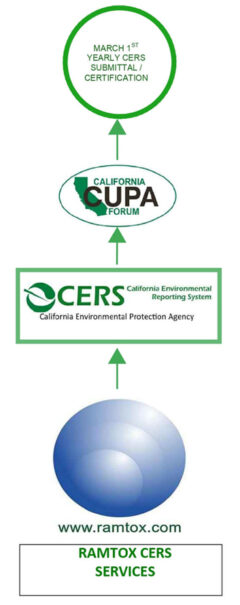
Under statewide implementation, California Environmental Reporting System (CERS) requires that in order to protect public health and the environment, data related to hazardous waste chemicals must be reported and submitted electronically. Data includes but is not limited to reporting and submitting chemical inventory, hazardous waste management, aboveground and underground storage tanks. For more information about CERS you can visit. https://cers.calepa.ca.gov/about-cers/.
Environmental Compliance Binder for each
facility at Ramtox Services:
We provide annual CERS Certification for:
- High Rise Buildings
- Hospitals
- Chemical Manufacturing
- Auto Repair
- Gas Stations
- UST and AST Facilities
- CERS Online Reporting
CERS Filing For UST facilities covers:
- Monitoring & Response Plan
- Tank Forms
- Monitoring Plot Plan and Piping Layout
- Multi-Site Maps
- Certificate of Financial Responsibility
- EPA Number and Designated Operator Statement Form
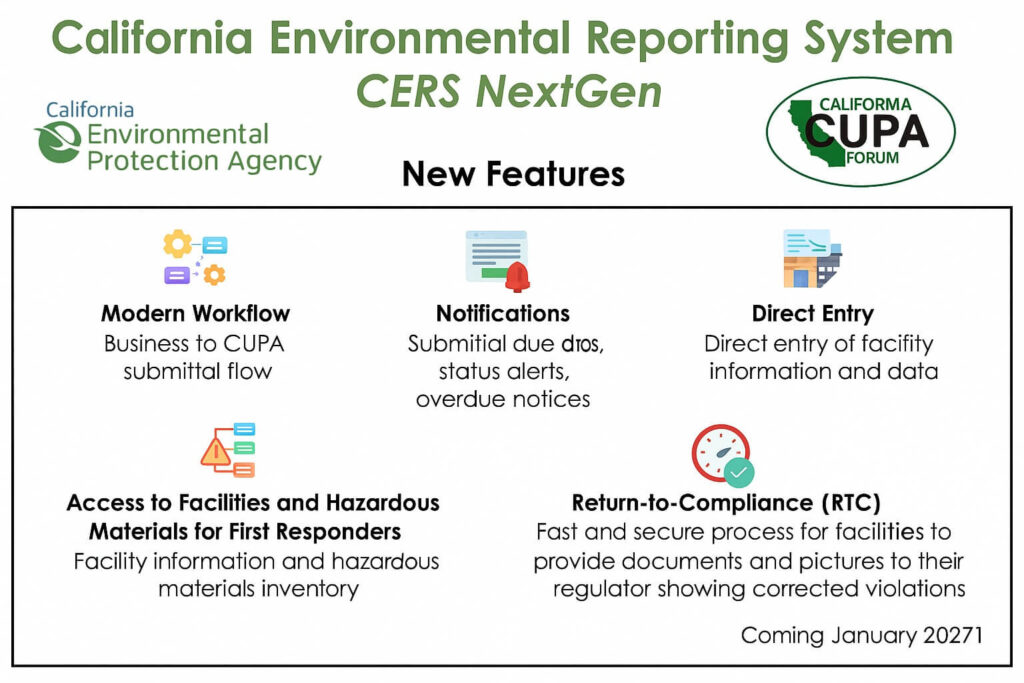
Stay Ahead with CERS NextGen
CERS NextGen represents the future of statewide environmental reporting in California. CERS NextGen is California’s modern cloud-based system that will replace the current CERS platform by January 2027.
When Hazardous Materials Must Be Reported in CERS:

Hazardous Materials Reporting Requirements
This Hazardous Materials Reporting Chart summarizes the inventory reporting requirements in Health & Safety Code (HSC), Chapter 6.95, Article 1, §25507.
When applicable, a facility must update its hazardous materials inventory using the California Environmental Reporting System (CERS: https://cers.calepa.ca.gov) and submit the changes for review and acceptance. State law requires changes or updates to a facility’s reportable inventory be submitted in CERS within 30 days (HSC §25508.1).
| Hazardous Materials Reporting Matrix | |
|---|---|
| Hazardous Materials Type | Reportable Quantities |
| Liquids | ≥ 55 gallons |
| Solids | ≥ 500 pounds |
| Gases | ≥ 200 cubic feet |
| Extremely Hazardous Substances (EHS) https://www.epa.gov/system/files/documents/2025-04/consolidated-list-of-lists-updated-april-2025.pdf |
≥ Threshold Planning Quantity (TPQ) |
| Irritants or Sensitizers (Classified as a hazard in 8 CCR §5194 solely as an irritant or sensitizer) |
≥ 5,000 pounds for solids ≥ 550 gallons for liquids |
| Paint (To be recycled or managed under an approved architectural paint recovery program) |
≥ 10,000 pounds for solids ≥ 1,000 gallons for liquids |
| Simple Asphyxiation or Pressure Release Hazard Gases (Classified as a hazard in 8 CCR §5194 solely for above hazards) |
≥ 1,000 cubic feet (at STP) |
| Oxygen, Nitrogen, or Nitrous Oxide (Maintained by a physician, dentist, podiatrist, veterinarian, pharmacist, or EMS provider) |
≥ 1,000 cubic feet (at STP) |
| Carbon Dioxide or Carbon Dioxide Mixed with Simple Asphyxiation Gases | ≥ 1,000 cubic feet (at STP) |
| Gases Used in Closed Fire Suppression Systems | ≥ 1,000 cubic feet (at STP) |
| Non-Flammable Refrigerant Gases (As defined in the CFC, that are used in refrigeration systems, e.g., fluorocarbons, chlorofluorocarbons) |
≥ 1,000 cubic feet (at STP) |
| Radioactive Material | Quantities that require an emergency plan pursuant to Schedule C, Part 30, 40, or 70 of Chapter 1 of 10 CFR |
| Perchlorate Material (As defined in subdivision [c] of HSC §25210.5) |
≥ 55 gallons for liquids ≥ 500 pounds for solids ≥ 200 cubic feet for gases |
| Pyrophoric or Water-Reactive Combustible Metals or Metal Alloys (As defined in the CFC and in raw stock, scrap or powder form) |
Any quantity |
| Combustible Dust, Flammable Solid, or Magnesium Metal or Metal Alloys (As defined in the CFC and in raw stock, scrap or powder form) |
≥ 100 pounds |
| Combustible Metals or Metal Alloys with Explosive Potential in Molten Form | ≥ 500 pounds |
Consumer Product at:
|
≥ 55 gallons for liquids ≥ 500 pounds for solids ≥ 200 cubic feet for gases |
Consumer Product at a Retail Establishment
|
≥ 165 gallons for liquids ≥ 1,500 pounds for solids ≥ 600 cubic feet for gases |
| Exemptions | |
| Hazardous Materials Type | Reporting / Exemption Quantities |
Consumer Product at a Retail Establishment
|
|
| Refrigerant Gases for Comfort or Space Cooling (Other than ammonia or flammable gas, in a closed cooling system used for comfort or space cooling of computer rooms) |
No requirement to report |
| Compressed Air (In cylinders, bottles, and tanks used by emergency response personnel) |
No requirement to report |
| Lubricating Oil | ≤ 55 gallons for each oil type, and ≤ 275 gallons for total volume of all types |
| Fluid in Hydraulic Systems | < 1,320 gallons aggregate storage capacity of oil |
| Oil-Filled Electric Equipment (NOT contiguous to an electric facility) |
< 1,320 gallons aggregate storage capacity of oil |
Propane
|
< 500 gallons |
Liquid or Gaseous Fuel
|
No requirement to report |
Treated Wood and Treated Wood Waste
|
No requirement to report |
Unstaffed Remote Facilities may be exempt from the annual resubmission of HMBP and triennial inspections, if specified conditions and requirements in HSC §25507.2 are met.
|
Types and quantities of hazardous materials are limited to one or more of the following:
|
References: Health and Safety Code, Chapter 6.95, Sections 25507 & 25507.2
What we do at Ramtox:
Visiting an auto repair facility to conduct inventory of hazardous chemicals. After doing site inspection upload chemical inventory onto CERS and prepare a facility site map showing exit routes, location of storage of hazardous material, testing of hazardous material and hazardous waste management.


